Let’s dive in

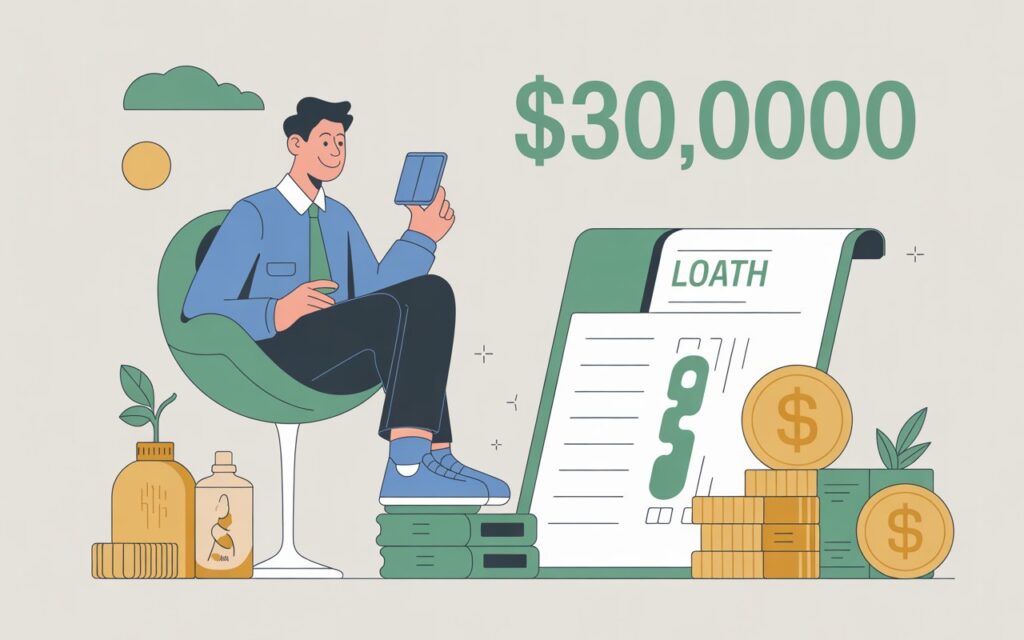
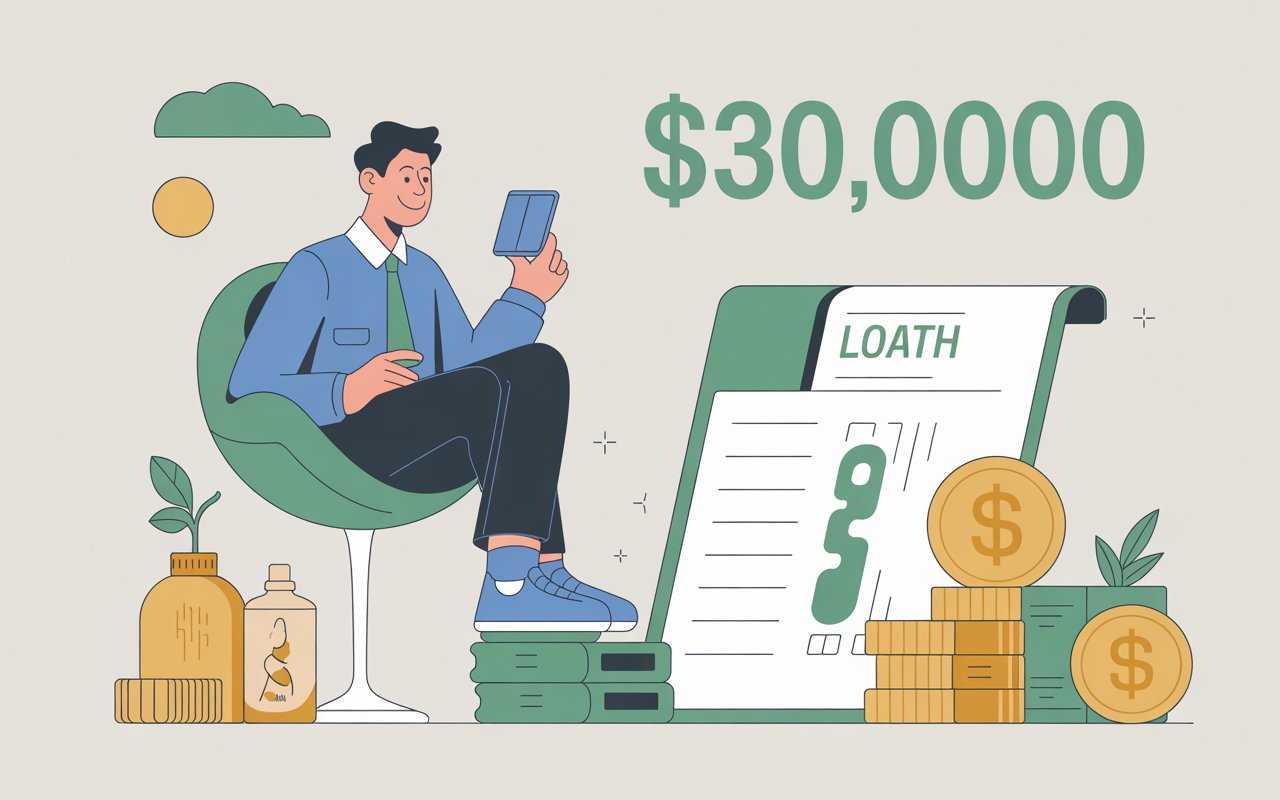
Managing a $30,000 student loan can feel overwhelming, but with the right knowledge and tools, you can navigate your repayment journey with confidence. Whether you’re exploring monthly payment options, calculating the total cost, or seeking ways to pay off your loan faster, this guide breaks down everything you need to know about a $30,000 student loan. We’ll cover monthly payment calculations, interest rates, federal vs. private loan differences, repayment options, and strategies to lower payments or accelerate payoff. Let’s dive in.
What Are the Monthly Payments on a $30,000 Student Loan?
The $30,000 student loan monthly payment depends on factors like the loan term, interest rate, and repayment plan. Using a student loan payment calculator for $30,000, you can estimate your payments based on these variables. For example, a $30,000 loan with a 5% interest rate over a standard 10-year term results in monthly payments on a $30k student loan with 5% interest of approximately $317. This assumes a fixed-rate loan with no additional fees. If the term extends to 20 years, the monthly payment drops to around $198, but you’ll pay more in interest over time.
To calculate this yourself, use the formula for a fixed-rate loan:
[ M = P \frac{r(1+r)^n}{(1+r)^n – 1} ]
Where:
- ( M ) = monthly payment
- ( P ) = principal loan amount ($30,000)
- ( r ) = monthly interest rate (annual rate ÷ 12)
- ( n ) = number of monthly payments
For a $30,000 loan at 5% interest over 10 years (120 months), the monthly interest rate is 0.05 ÷ 12 = 0.004167, and the calculation yields a payment close to $317. Online calculators simplify this process, letting you input different terms and rates to see how they affect your payments.
How Long to Pay Off a $30,000 Student Loan?
The time it takes to pay off a $30,000 student loan depends on the repayment term and any extra payments you make. Standard federal loan terms are typically 10 years, but extended or income-driven repayment (IDR) plans can stretch to 20 or 25 years. For private loans, terms often range from 5 to 20 years. Using the example above, a $30,000 loan at 5% interest with $317 monthly payments takes 10 years. If you pay only $200 monthly, it could take closer to 20 years, increasing the total cost of a $30,000 student loan over time due to accruing interest.
Making extra payments can significantly reduce the payoff time. For instance, adding $100 to the monthly payment on a 10-year, 5% interest loan could shave off a year or more, saving hundreds in interest. We’ll explore more strategies for paying off a $30,000 student loan faster later.
Average Interest Rate on Student Loans
The average interest rate on student loans varies between federal and private loans. As of 2025, federal undergraduate loans typically carry fixed rates between 4.5% and 7%, depending on the loan type and disbursement date. Graduate loans may have higher rates, around 6% to 8%. Private student loan rates can range from 3% to 14%, depending on your credit score, lender, and whether you choose a fixed or variable rate. Variable rates may start lower but can increase over time, impacting your $30,000 student loan monthly payment.
For example, a $30,000 loan at 7% interest over 10 years increases the monthly payment to about $356, compared to $317 at 5%. Always compare rates when choosing between federal vs. private student loan payments, as federal loans often offer more flexible repayment options despite slightly higher rates.
Federal vs. Private Student Loan Payments
When comparing federal vs. private student loan payments, consider the benefits and drawbacks of each. Federal loans, backed by the government, offer fixed interest rates and flexible repayment plans, such as income-driven repayment (IDR), which caps payments at a percentage of your income. They also provide options like deferment, forbearance, and potential loan forgiveness, which are rarely available with private loans. For a $30,000 federal loan at 5% interest, you might pay $317 monthly on a standard plan or less under an IDR plan, depending on your income.
Private loans, offered by banks or credit unions, may have lower rates for borrowers with excellent credit but often lack the protections of federal loans. They may also have variable rates, which can increase your monthly payments on a $30k student loan over time. For instance, a $30,000 private loan at a 4% fixed rate over 10 years results in a monthly payment of about $304, but a variable rate starting at 4% could rise, pushing payments higher.
Student Loan Repayment Options Explained
Understanding student loan repayment options explained is key to managing your $30,000 loan effectively. Federal loans offer several plans:
- Standard Repayment Plan: Fixed payments over 10 years (e.g., $317 for a $30,000 loan at 5%).
- Graduated Repayment Plan: Payments start lower and increase every two years, ideal for those expecting income growth.
- Extended Repayment Plan: Fixed or graduated payments over up to 25 years, lowering monthly payments but increasing total interest.
- Income-Driven Repayment (IDR) Plans: Payments based on income and family size, with terms of 20–25 years. Forgiveness may apply to remaining balances.
Private loans typically offer fixed or variable repayment terms of 5 to 20 years, with fewer flexible options. Some lenders allow refinancing to adjust terms or rates, which can lower payments or shorten the loan term.
How to Lower Monthly Student Loan Payments
If your $30,000 student loan monthly payment feels unaffordable, there are ways to lower monthly student loan payments:
- Switch to an IDR Plan (Federal Loans): Caps payments at 10–20% of discretionary income, potentially reducing your payment to as low as $100 or less, depending on your income.
- Extend the Loan Term: For federal or private loans, extending to 15 or 20 years lowers monthly payments but increases total interest. For example, extending a $30,000 loan at 5% to 20 years reduces payments to $198.
- Refinance Private Loans: Refinancing to a lower interest rate or longer term can reduce payments. For instance, refinancing a $30,000 loan from 7% to 4% over 10 years lowers payments from $356 to $304.
- Request Deferment or Forbearance (Federal Loans): Temporarily pause or reduce payments during financial hardship, though interest may accrue.
- Make Interest-Only Payments: Some private lenders allow this temporarily, reducing monthly costs but extending the loan term.
Always weigh the trade-offs, as lower payments often mean higher interest costs over time.
Paying Off a $30,000 Student Loan Faster
To pay off a $30,000 student loan faster, consider these strategies:
- Make Extra Payments: Apply additional payments to the principal to reduce interest and shorten the term. For example, paying $417 instead of $317 on a 10-year, 5% loan could cut the term by about two years.
- Refinance to a Shorter Term: Refinancing a $30,000 loan to a 5-year term at 4% increases payments to $552 but saves thousands in interest.
- Use Windfalls: Apply tax refunds, bonuses, or side hustle income to the principal.
- Round Up Payments: Paying $350 instead of $317 monthly adds up over time, reducing the loan term.
- Biweekly Payments: Paying half the monthly amount every two weeks results in one extra payment per year, speeding up repayment.
Total Cost of a $30,000 Student Loan Over Time
The total cost of a $30,000 student loan over time includes the principal plus interest. For a $30,000 loan at 5% interest over 10 years, you’ll pay about $38,040 total ($317 × 120 months). Over 20 years, the total cost rises to $47,520 ($198 × 240 months) due to additional interest. Higher interest rates or longer terms increase this cost further. For example, at 7% over 10 years, the total cost is $42,720.
To minimize costs, prioritize paying off high-interest loans first, make extra payments, or refinance to a lower rate. A student loan payment calculator for $30,000 can help you compare scenarios and plan effectively.
Final Thoughts
Navigating a $30,000 student loan requires understanding your monthly payments, interest rates, and repayment options. Whether you choose federal or private loans, tools like calculators and strategies like extra payments or refinancing can help you manage costs and pay off your loan faster. By exploring student loan repayment options explained and implementing tips to lower monthly student loan payments, you can take control of your financial future. Start by calculating your payments and exploring repayment plans to find the best fit for your budget and goals.
FQA
How much is the monthly payment on a $30,000 student loan?
The monthly payment depends on your interest rate and repayment plan. On average, it can range between $200–$350 per month.
How long does it take to pay off a $30,000 student loan?
With a standard 10-year repayment plan, it usually takes 10 years, but with extra payments, you can pay it off faster.
What is the interest rate on a $30,000 student loan?
Federal student loan rates are typically around 5–6%, while private loans may vary from 4–12% depending on credit.
Can I lower my monthly student loan payment?
A: Yes, you can refinance, switch to an income-driven repayment plan, or extend your repayment term to reduce monthly payments.